Khamenei’s Death Fuels Fears of Extended Regional Chaos
Khamenei's Death Sparks Fears of Prolonged Regional Chaos
Iran confirmed on Sunday that its Supreme Leader Ali Khamenei was killed in U.S.-Israeli airstrikes the previous day. The killing of Khamenei has triggered a strong response from the Islamic Republic. As the latest escalation continues, analysts warn that the Middle East could spiral into deeper instability and chaos. "Widening the lens to the entire Middle East, the situation is sliding into a more dangerous and unpredictable new phase," said an analyst.
Khamenei's Death
Iran confirmed on Sunday that its Supreme Leader Ali Khamenei was killed in U.S.-Israeli airstrikes the previous day. "The Supreme Leader ... lived a pious life, loved Iran, secured Iran's independence, opposed foreign domination, and worked tirelessly for our country's resilience and fortitude," the Iranian Foreign Ministry said in a statement. "He will remain a living nightmare for his killers forever." Born in 1939, Khamenei assumed the position of Iran's Supreme Leader in 1989 following the death of Ruhollah Khomeini, the founder of the Islamic Republic. For decades, Khamenei led Iran in its confrontation with Western countries, including the United States, while the country endures prolonged U.S. sanctions. On Saturday, after sending multiple military threats, the United States and Israel initiated large-scale attacks on Iran's military facilities and high-ranking officials.
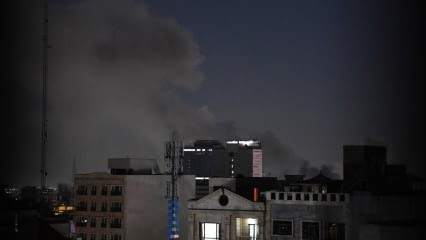
U.S. President Donald Trump said the objective "is to defend the American people by eliminating imminent threats" from Iran, and the Israeli Defense Ministry said the country launched a "preemptive" strike against Iran "to remove threats to Israel." The Israeli military said some 200 fighter jets carried out an extensive attack in western and central Iran, marking the largest military flyover in the history of the Israeli Air Force. In Tehran, missiles struck areas near Khamenei's office. Following conflicting statements, Iran's Nour News announced on Sunday morning the death of the supreme leader. "Iran's leader attained martyrdom while carrying out his duties at his office," the report said, adding that several family members were also killed.
Following the announcement, the Iranian cabinet declared 40 days of national mourning. Mourners gathered across cities, voicing anger and calling for retribution. Ali Larijani vowed harsh retaliation against the United States and Israel. "Yesterday Iran fired missiles at the United States and Israel, and they did hurt. Today we will hit them with a force that they have never experienced before," Larijani said.
Extensive Shockwaves
The U.S.-Israeli attacks triggered retaliations from Iran, with missile strikes reported in Israel and Gulf countries including Bahrain, Qatar, Kuwait, Jordan, the UAE, and Saudi Arabia. As the conflict entered its second day, casualties and damage increased across the region. In Iran, the death toll from an attack on a girls' elementary school in Hormozgan rose to 165, with dozens injured. Israeli officials said Iranian missile attacks resulted in at least one death and several injuries. U.S. Central Command reported three service members killed and five seriously wounded. The UAE reported at least three deaths and 58 injuries during Iranian airstrikes. In Oman, two drones targeted the Port of Duqm, injuring one worker. Iran's regional allies, including Hezbollah and the Houthis, expressed outrage and vowed continued resistance. Israel said it was preparing to call up 100,000 reservists to increase readiness along its borders.
Prolonged Chaos
Following Khamenei's killing, Iran announced the formation of a three-member transitional council to handle state duties. The interim leadership council includes President Masoud Pezeshkian and Judiciary Chief Gholamhossein Mohseni-Ejei. Analysts believe Khamenei's death could lead to significant geopolitical shifts and prolonged chaos. "Since the United States and Israel violated one of Iran's red lines by assassinating the Supreme Leader, this gives Iran a reason to escalate the conflict," said Abu-Bakr Al-Desouky. Adnan Bourji said the war is still in its early stages with no clear indication of a swift end. Syrian political expert Maher Ihsan said the escalation is deepening hatred and vengeance in the region. "This is not going to bode well for Israel and America; it's just going to drown this region into further turmoil," he said.
Mohammed Zakaria Aboudahab described the outbreak of war and Khamenei's death as a fundamental rupture in the regional order. "Widening the lens to the entire Middle East, the situation is sliding into a more dangerous and unpredictable new phase," he added.
Video reporters: Dong Xiuzhu, Fahrzam Vanaki and Eran Lahav; video editors: Yu Jiaming, Liu Xiaorui and Hui Peipei
Source: Xinhua
YEz89PEgbN4?si=7PfmXVgiolg7NGvQ
Gib als Erster einen Kommentar ab
oktothek_default_login_teaser_link